
Gen Alpha Branding: How to Design Brands That Actually Resonate
Annabelle Cole

Gen Alpha Branding: What the Most Brand-Literate Generation Demands From Design
If you're a brand targeting under-18s, or creating a brand that lasts, stays relevant and on-trend understanding Gen Alpha branding isn't optional! (Sorry to break it to you).
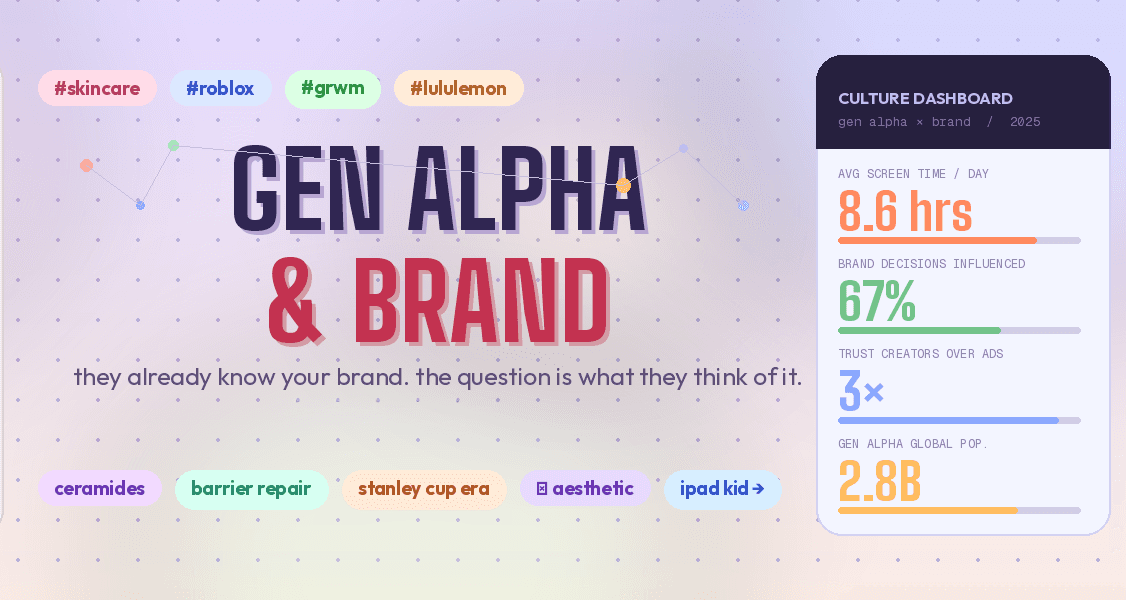
Gen Alpha (born 2010 onward) are the first generation raised entirely inside algorithmic culture. They've never known a world without touchscreens, ASMR content, short-form video, or influencer-led discovery. It makes them extraordinarily fluent in the visual and cultural language of brands.
At Astrik Studio, audience psychology sits at the core of how we approach identity and design. Understanding how a generation thinks, discovers, and decides is what separates branding that performs from branding that just looks good. This is our breakdown of what Gen Alpha branding actually requires, and why most brands are still designing for the wrong behaviours.
Why Gen Alpha Branding Is Different
Most brand conversations treat Gen Alpha as a slightly younger version of Gen Z. While Gen Z came of age alongside social media, Gen Alpha was born inside it. The distinction matters enormously for how brands need to sow up.
Gen Z grew up watching brands learn to be 'authentic.' Gen Alpha grew up after that, they were there when authenticity became a strategy, and they can smell it. They've seen every trick: the relatable brand voice, the cause-washing campaign, the influencer post that reads like an ad even when it isn't labelled.
They they decode content instantly and scroll past fast. If it feels fake, or salesy they can spot it a mile-off.
This is the central challenge of Gen Alpha branding: you're designing for an audience that is simultaneously young and extraordinarily media-literate.
The Skincare Case Study: Education as Brand Identity
Brands like Drunk Elephant, Byoma, and The Ordinary didn't design campaigns for 11 year olds. Yet all three have achieved outsized cultural traction with Gen Alpha girls, because each brand, in different ways, made their audience feel genuinely informed rather than sold to.
Drunk Elephant built its identity around ingredient transparency long before it was a trend. Colour-coded, playful packaging paired with clinical, honest product communication created a brand that felt like 'fun science.' It walked the line between premium and approachable, giving Gen Alpha the feeling of accessing something adult-coded without being excluded.
Byoma went further into the education-first model. Barrier-function skincare explained in plain language. A visual system that was colour-coded, collectible, (packaging weirdly satisfying) and immediately legible on a TikTok GRWM. Plus accessible price points that made parental buy-in easy.
The Ordinary operates at the most extreme end of this spectrum, a brand built almost entirely on ingredient-level transparency. No lifestyle photography, no aspirational tone, no influencer-first strategy. Just honest information. And Gen Alpha, particularly older cohorts who discovered it on TikTok, responded enormously.
The formula: education disguised as empowerment, wrapped in design that's built to travel across feeds.
For design studios working in this space, this is a direct brief: build identities that teach something. Visual systems that reward curiosity. Packaging that looks as good in a screenshot as it does on a shelf.
Gen Alpha Boys: Status, Community, and the Gaming Ecosystem
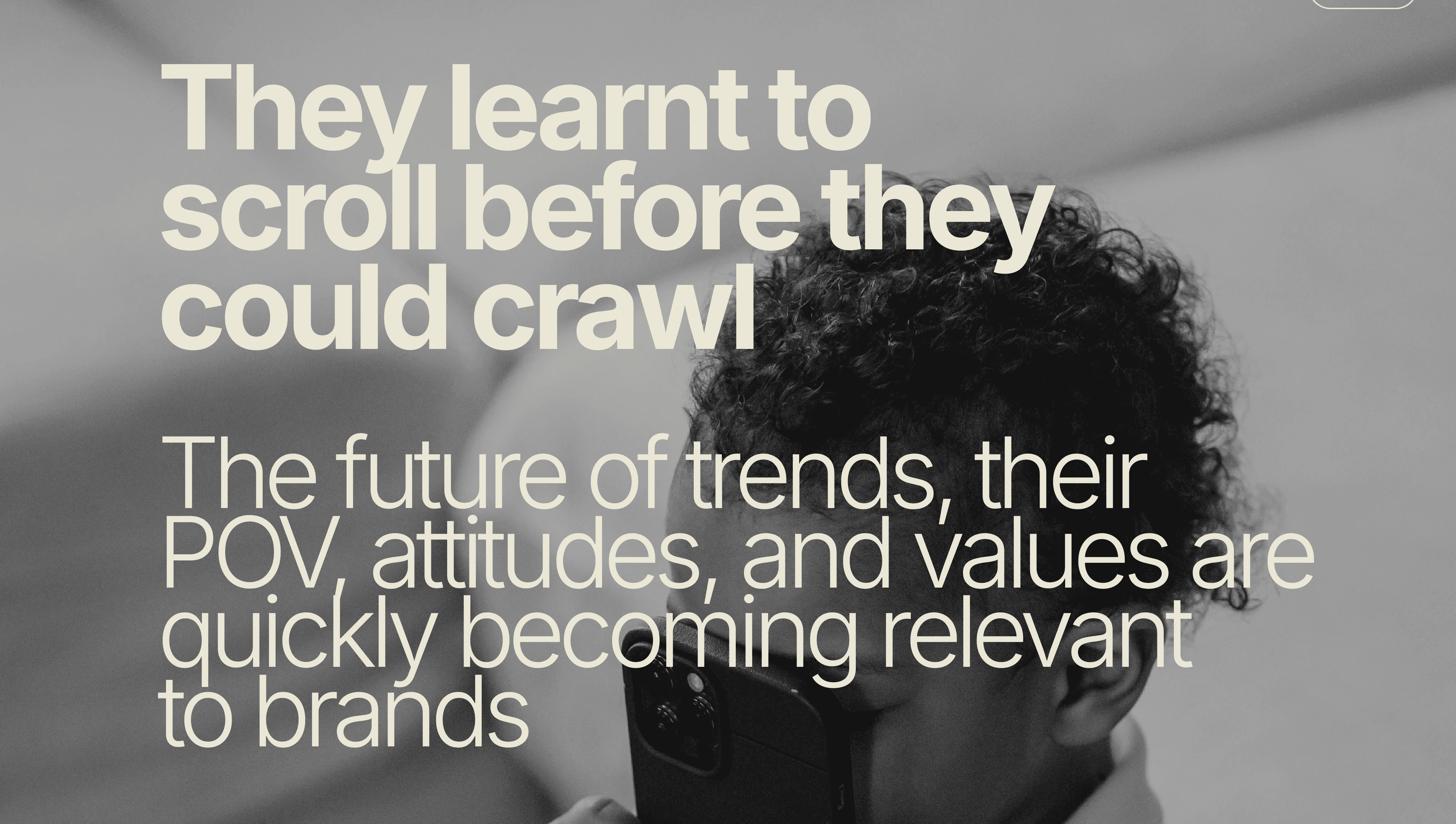
The dynamic is different with Gen Alpha boys, but the underlying psychology, belonging, identity, status signalling, is the same.
The dominant categories are gaming (Roblox, Minecraft, Fortnite), tech accessories, and performance-led sportswear. These have almost become tribal markers. What skin you run in Fortnite, what headset you use, which football boots you wear: each communicates membership in a specific community.
Brands winning with Gen Alpha boys understand that customisation and creator validation matter more than product features alone. When a YouTuber or streamer with 8 million subscribers uses your product unboxed on camera without a label, without a script that's worth more than most paid campaigns.
Nike, Adidas, and new entrants like HOKA and On have all navigated this space by leaning into performance credibility, creators, and visual systems that feel reactive rather than static. Branding that looks like it moves.
For minimalist brand design working in this category, the challenge is to build systems that feel alive without becoming chaotic, bold, modular, motion-ready identities that hold across channels and social content simultaneously.
Social Media is How They Experience the World
For this generation, social media isn't a place they visit, it's intertwined with their world. Believe it or not many Furthermore, 26% of Gen Alpha live in a household that owns a VR device, and that number is growing. The future is here and media, marketing and brand are going to be experience virtually, in new ways very soon.
For Gen Alpha content, ads, and reviews all appear in the same feed. There is less and less distinction between a sponsored post and an organic recommendation from a creator they trust.
This has two major implications for brand design. First, static branding a logo, a colour palette, a campaign poster has almost no legibility in a motion-first, short-form-first context. If your brand identity doesn't yet translate into a TikTok thumbnail, a YouTube Shorts frame, or a Reel hook, it effectively doesn't exist for Gen Alpha.
Over-polished, high-production content reads as inauthentic. Gen Alpha has grown up watching brands learn to perform authenticity, and they're sceptical of any aesthetic that feels too considered, too corporate, too produced. The brands that land are often the ones that look like they were made by someone who actually uses the product.
For a design studio for Gen Alpha brands, this means building identities with what we call 'remixability.' Visual language that works in motion and at rest, at scale and in a screenshot, across all digital platforms. With the ability to adapt, be dynamic and grow. We design brands that never make you feel 'stuck'.
What Minimalist Brand Design Means for Gen Alpha
The brands they return to Byoma, The Ordinary, Lululemon, Apple, even Roblox's UI, share the same visual logic: if something doesn't need to be there, it isn't. This isn't minimalism as aesthetic fashion. It's a trust signal. Brands that look clear feel honest.
There's a deeper cultural current here with roots that go back further than TikTok. Dadaism, the radical art movement born in 1916- was built on rejecting the overly polished and institutionally "correct." A century later, something structurally similar is happening in brand photography. As AI tools now produce technically flawless imagery at scale, perfection has lost its credibility. The Dadaists rejected the gilded surface of their era because it felt hollow. Gen Alpha is doing the same thing, just with iPhone cameras and comment sections.
The brands winning with them have absorbed this instinctively. Rawness, handled with intention, reads as confidence. Imperfection is no longer a lack of craft, it's a point of view.
What This Means for Brands Building Right Now
Your brand identity should make someone feel smarter for encountering it, not just impressed by how it looks.
Design for the screenshot, the shelf tour, and the six-second scroll
Write like you're letting them in on something, not selling them something
Build packaging and visual systems that people actually want to put in their content
Stop treating social as a distribution channel. It's where your brand actually lives
The most trusted brands right now look a little imperfect on purpose, it's a strategy
Gen Alpha is already defining the taste that will dominate the next decade, and they're doing it at the exact moment AI is reshaping what "good design" even means. When generative tools can produce technically perfect work in seconds, the question stops being can we make it look flawless? and becomes can we make it feel true? The studios and brands that understand this generation now will be the ones who define what comes next.
About Astrik Studio
Astrik Studio is a brand design studio specialising in Gen Alpha and Gen Z audiences. We build brand identities, visual systems, and social media strategy, for brands that want to matter to the next generation.
